Polyaspartic at a glance
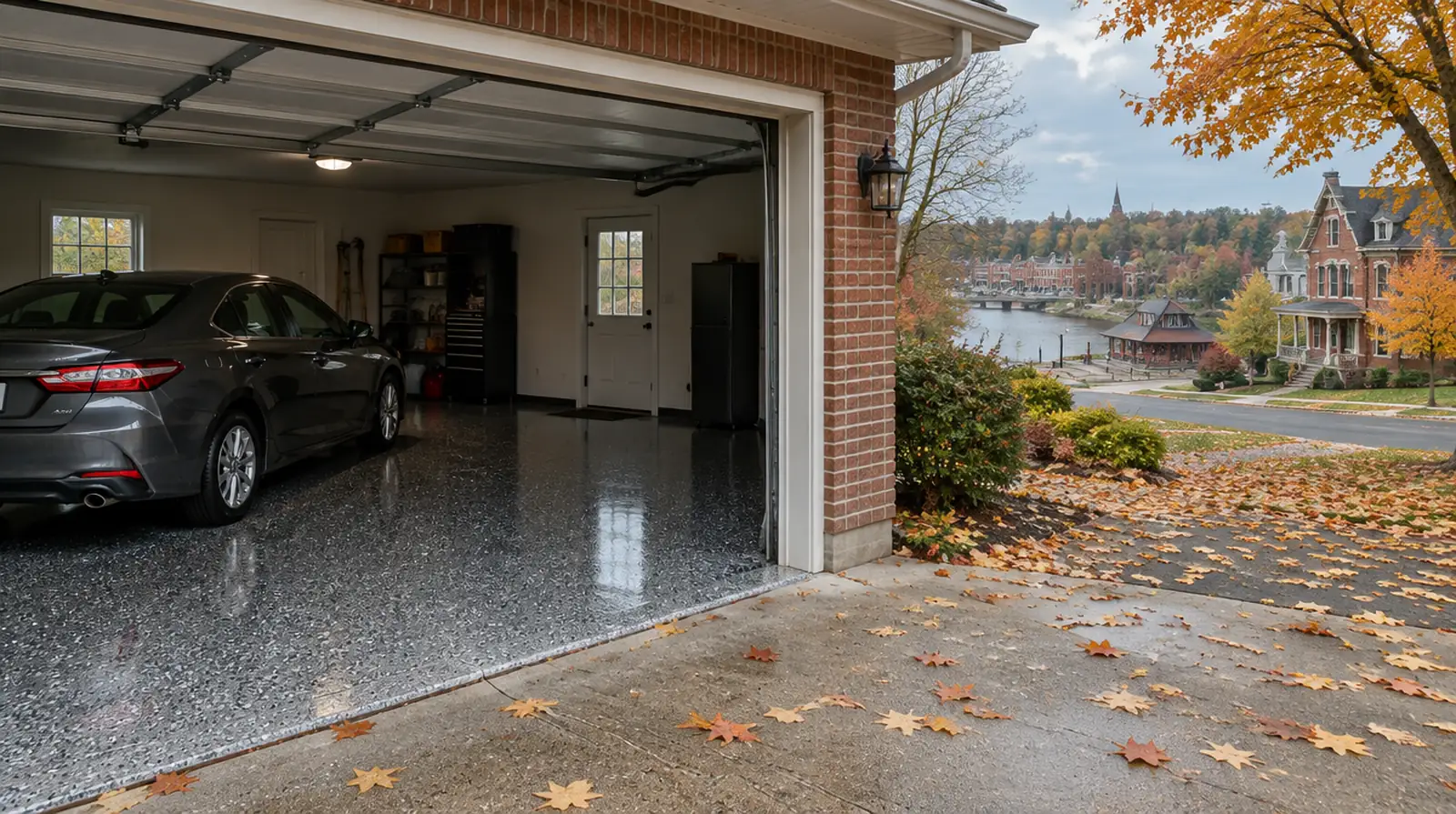
Polyaspartic is part of the polyurea family. It cures far faster than epoxy, stays flexible, resists abrasion and chemicals and does not yellow in sunlight. Garages, porches enclosed as mudrooms and small shops all benefit from those traits. For many households, the biggest advantage is time: the floor is often finished in a single day.
A longer Michigan coating season
Epoxy needs a warm slab to cure properly, which limits garage work in unheated spaces to the warmer months. Polyaspartic cures at lower temperatures, so we can install later into fall and earlier in spring. We still check slab temperature and dew point before each coat, because condensation on a cold slab ruins any coating.
Salt and slush resistance
Once cured, polyaspartic stands up to road salt, brine, calcium chloride, oil, gasoline and antifreeze. Its flexibility helps it handle the expansion and contraction of slabs through freeze-thaw cycles, and its hardness resists the scrape of shovels and snow blower skids.
UV stability
Epoxy can turn amber in sunlight. Polyaspartic does not, which matters in garages with windows or doors left open on summer afternoons and in sunrooms or porches. Colors stay true for years.
Epoxy primer first
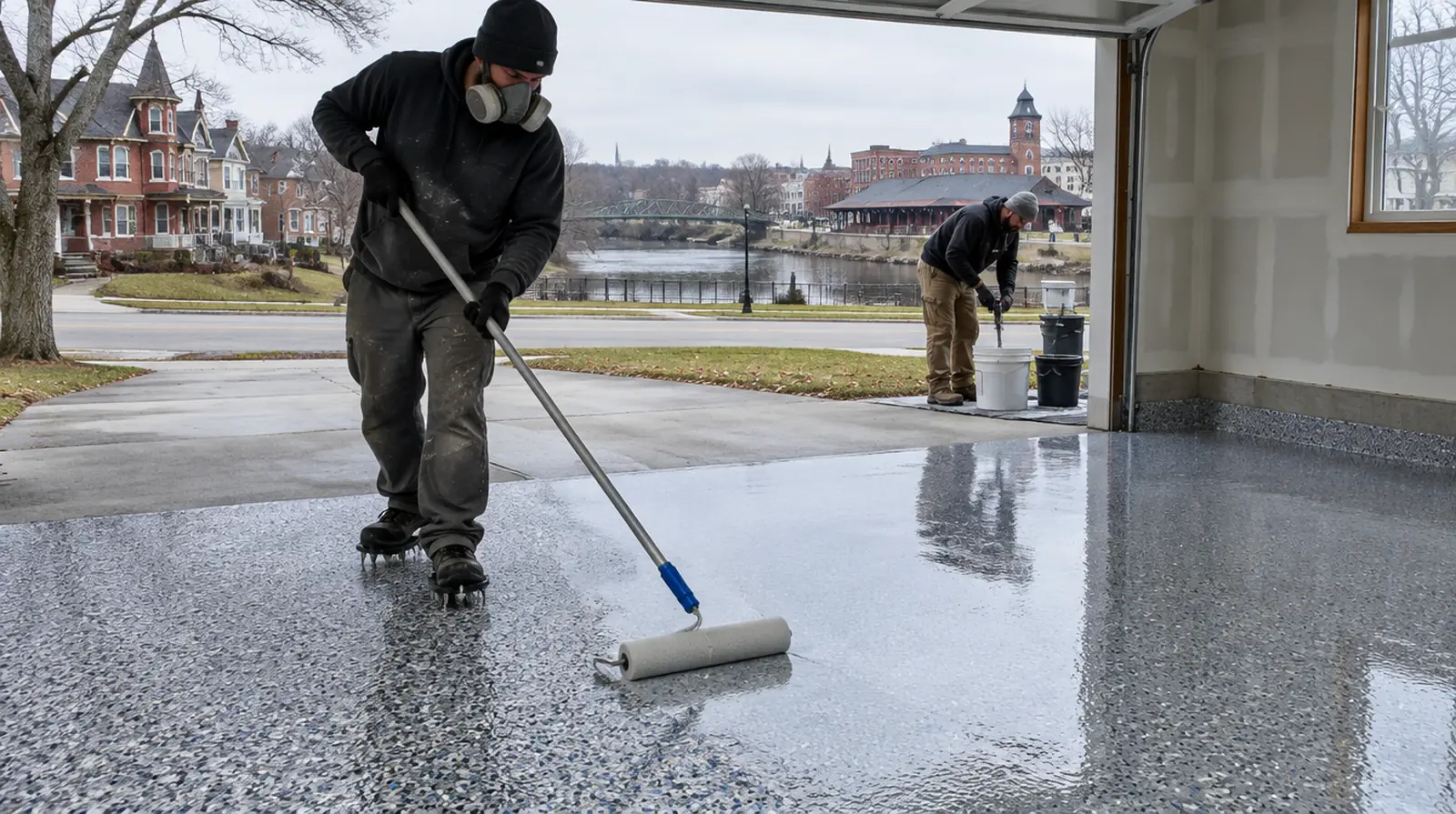
Polyaspartic cures so quickly it has little time to soak into concrete. We prime with a penetrating epoxy for bond, then build the body and topcoats with polyaspartic. On damp basement or old garage slabs, a vapor-tolerant primer comes first.
Skilled installation
Short working time means small batches, coordinated crews and careful timing. Lap marks and bubbles show if installers fall behind. That skill requirement is why polyaspartic is rarely a DIY product.
Finish options
Full flake, quartz, solid color and clear coats over decorative bases are all available. We tune texture for traction near doors where snow melts off cars.
Small businesses
Restaurants, salons, clinics and service bays use polyaspartic when closing for days is not possible. We can coat sections overnight and reopen them by morning.
Odor and ventilation
There is odor during installation. We ventilate garages, seal doors to living spaces and recommend keeping pets away. The smell fades quickly once cured.
Timeline
Grinding and repairs in the morning, base and flake midday, topcoat in the afternoon. Foot traffic in hours, vehicles in about a day in moderate temperatures.
Cost
Polyaspartic costs more than all-epoxy systems because of materials and labor. The payoff is speed, UV stability and flexibility through winter.
Detached garages
Older detached garages behind bungalows and Victorians are often unheated and have no insulation. Polyaspartic's tolerance for cooler slabs makes it the best choice for many of these buildings, especially if the job falls in October or April. We check that the slab is dry and above dew point first.
Questions
Can you install in cold weather? Within limits; slab temperature must be suitable.
Will it yellow? No.
Is it really one day? Often, though heavy repairs can add time.
When epoxy is still the right choice
Polyaspartic is not always necessary. For a basement with no sunlight and no time pressure, an all-epoxy system can be a good value. We explain the trade-offs honestly and quote both options when it makes sense, so you can decide based on budget, schedule and exposure.
Winter prep in the fall
Homeowners often call in October wanting a coated garage before the first snow. Polyaspartic makes that realistic. We recommend booking early, since fall is our busiest season.
Walkthrough and care
At the end of the day we walk the floor with you, explain cure times and leave written care instructions. In winter, squeegeeing out slush and rinsing salt film in spring keeps the floor looking new for years.
Book a one-day floor
Call (734) 896-5842 for a free estimate.