What makes a metallic floor
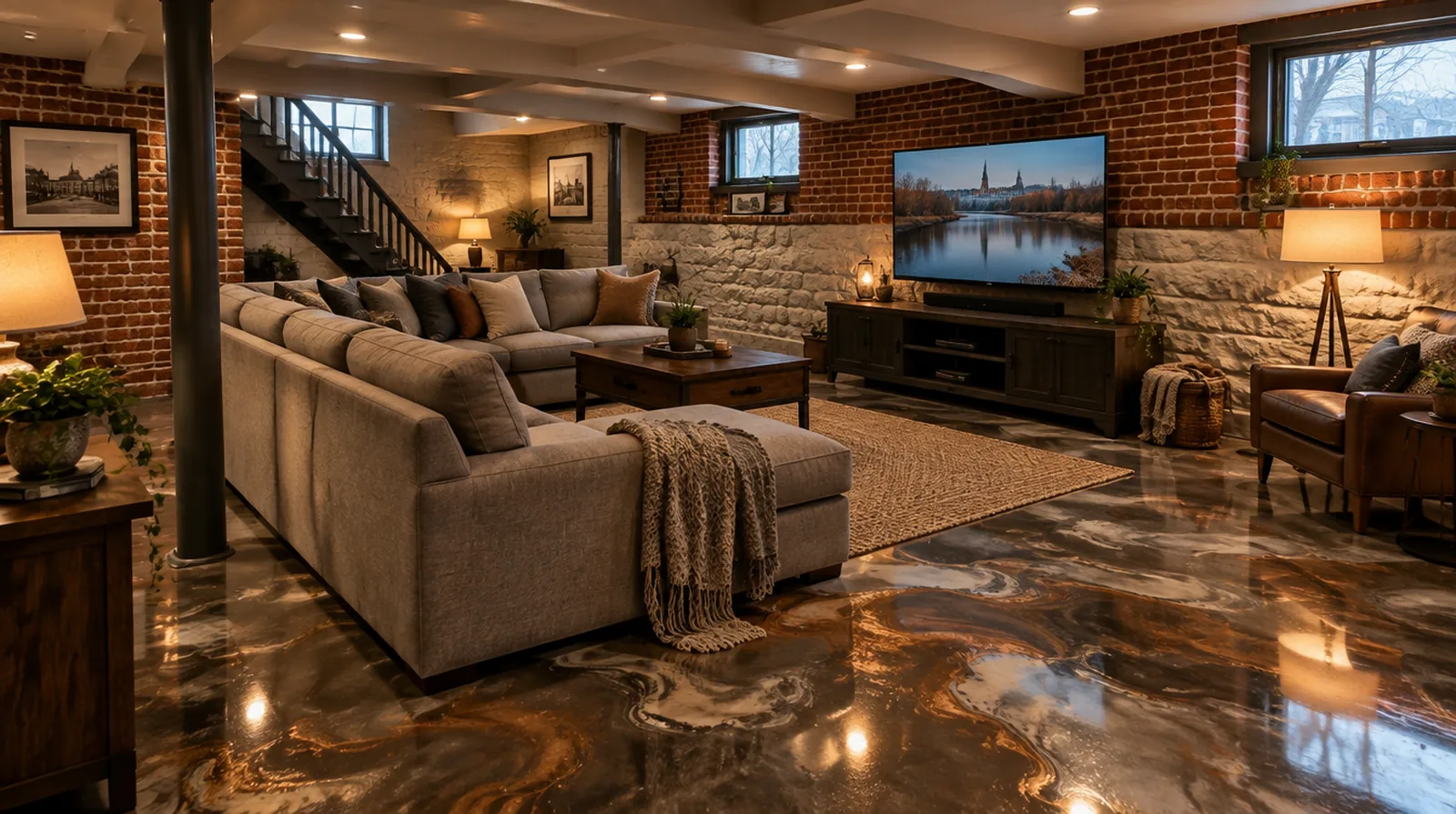
Metallic epoxy is clear resin carrying fine reflective pigments. As installers work the material while it is wet, the pigments drift into soft clouds, ribbons and veins. Light catches them differently from each angle, so the floor seems to move as you walk across it. The look ranges from marble to brushed metal to water, depending on colors and technique.
Where it shines
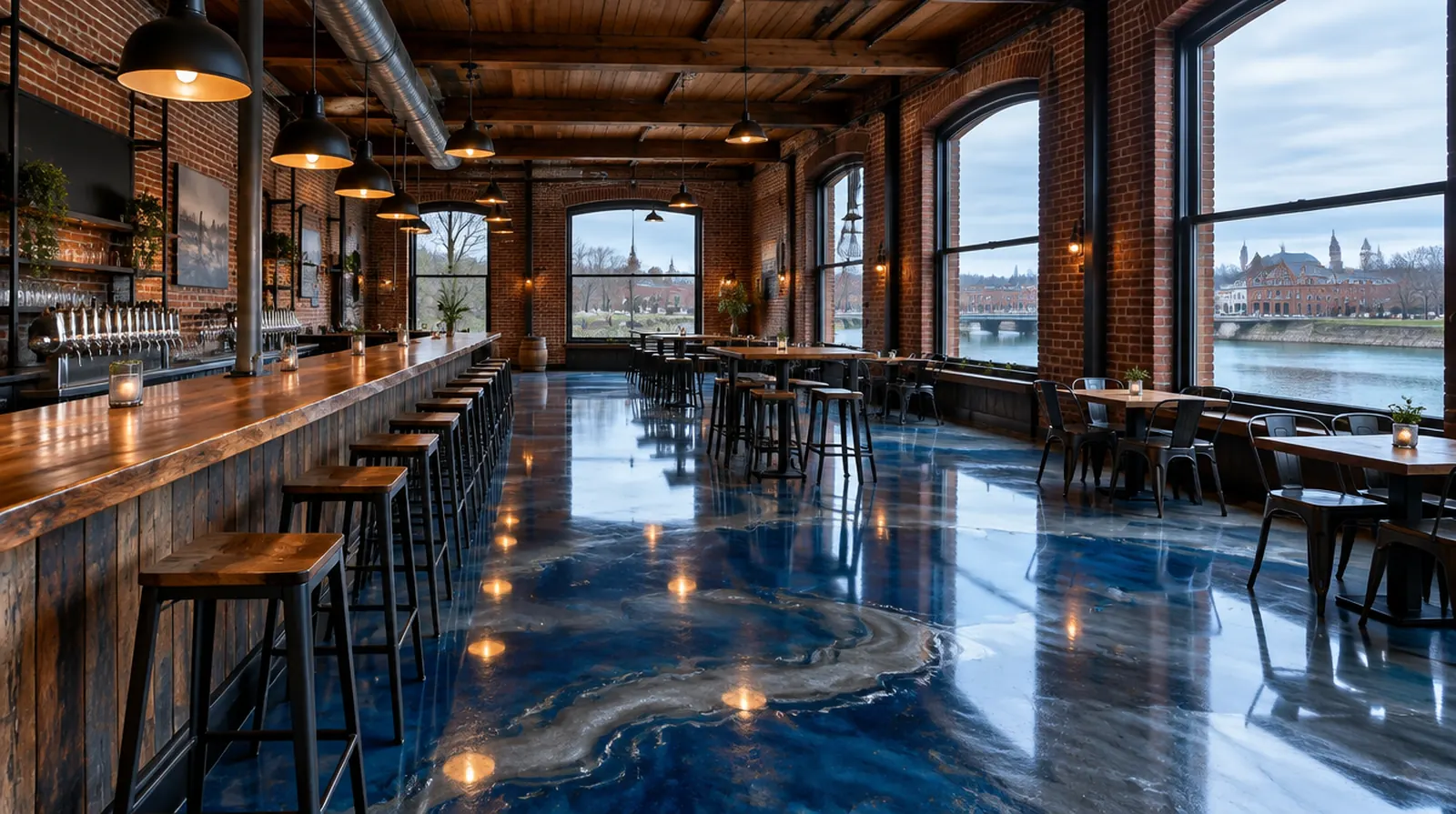
Basement family rooms, home bars, theaters, offices and gyms are typical residential uses. Commercial spaces include taprooms, salons, galleries, boutiques and studios, many in the old brick blocks downtown. In busy garages, scratches and salt show on smooth glossy surfaces, so flake usually makes more sense there.
Moisture in old basements
Basements in older homes often sit on slabs with no vapor barrier. Moisture rising through concrete can blister or cloud glossy coatings. We test every slab and use a moisture-mitigating epoxy primer when needed. Active leaks must be fixed first.
Preparing a flat surface
Gloss reveals every flaw. Old basement floors often have patches, paint, tile adhesive and uneven pours. We grind, fill and skim coat as needed so the finished floor looks like poured glass rather than a coated slab.
Installation steps
After priming, a tinted base coat sets the background. The metallic layer goes on in planned sections so there are no visible seams, and we manipulate the pattern while the material flows. A clear topcoat finishes the floor and adds scratch resistance.
Color palettes
Bronze and copper over dark bases suit bars and historic interiors. Silver and charcoal feel contemporary. White and gray with veins create a marble effect. Deep blues and teals evoke water. We make sample boards in your colors before installation.
Cold-weather installs
Resin needs warmth to flow and cure. In winter, we confirm the basement is heated to a stable temperature and keep air movement low during pours.
Traction
Glossy floors can be slick when wet. Near entries and bars we add a clear anti-slip additive to the topcoat.
Timeline and cost
Most basements take three to four days. Metallic floors cost more than standard coatings due to materials, prep and skill.
Care
Dust-mop frequently, wash with a neutral cleaner and use felt pads under furniture. A new topcoat refreshes the gloss years later.
Questions
Is each floor unique? Yes, no two pours are identical.
Can it go over vinyl tile? We remove coverings first.
Does it scratch? It can; topcoats and care help.
Historic interiors
In old brick commercial spaces and Victorian homes, metallic floors can feel surprisingly natural when the palette echoes existing materials. Copper and bronze tones pick up the warmth of brick and old timber. Deep green or blue tones pair well with painted woodwork. We often bring brick and wood samples alongside resin boards to compare.
Studios and creative spaces
Artists, photographers, dancers and musicians use lofts and studios throughout town. A metallic floor gives those spaces a finished, gallery feel that photographs beautifully. For dance and yoga studios, we adjust texture and topcoat for appropriate grip.
Planning furniture and fixtures
Because the floor is the centerpiece, think about where rugs, sofas and bars will sit. We can concentrate the most dramatic movement in open areas and keep calmer patterns under furniture, so the best part of the floor stays visible.
Sample boards first
Every metallic project starts with physical samples made in your chosen colors. We review them in your space and light so there are no surprises when the floor is poured.
Home gyms and theaters
Basement gyms get rubber mats over a metallic floor in lifting zones, leaving the rest of the room shining. Theaters look best in dark palettes that will not reflect screen light.
Plan a metallic floor
Call (734) 896-5842 for a free estimate.