
The concrete becomes the floor
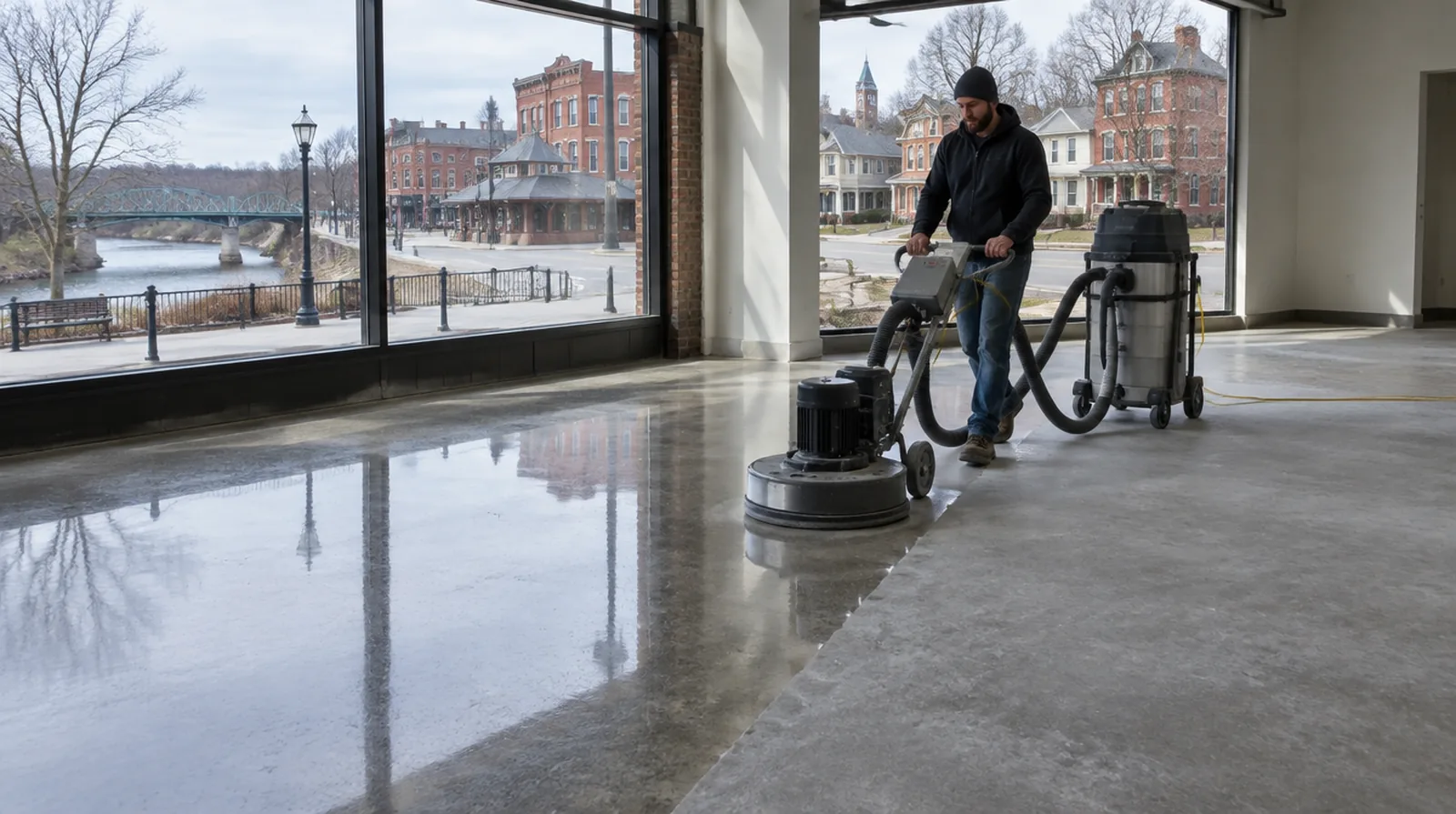
Polished concrete uses diamond tooling to grind and refine the slab itself. A densifier hardens the surface. Successive polishing passes bring up the sheen. There is no coating to peel, chip or delaminate. The floor wears like stone and becomes more lustrous with proper maintenance.
The process
Coarse diamonds flatten the slab and remove coverings and adhesive. A silicate densifier soaks in and hardens the concrete. Finer resin-bond diamonds polish to the chosen sheen. A penetrating guard can add stain resistance.
Old buildings, old slabs
Brick commercial and industrial buildings in town often hide interesting concrete under carpet, tile and linoleum. Once uncovered, many slabs polish into floors with real character: old patches, saw cuts and aggregate tell the building's story. We evaluate each slab and show you a test area before committing.
Basements
Damp Michigan basements are tricky for coatings. Polished concrete lets vapor pass, so it does not blister or peel. It is a practical choice for lower-level offices, gyms and playrooms. Add rugs for warmth.
Aggregate exposure
Cream finishes keep the top paste. Salt and pepper reveals fine sand. Full aggregate shows larger stones. Glacial gravel in regional concrete often polishes into a lovely mix of colors.
Sheen levels
Satin for homes and studios, semi-gloss for shops and offices, high gloss for showrooms.
Dyes
Penetrating dyes add warm or cool tones, borders or logos. They are best indoors away from strong sunlight.
Limitations
Polishing shows existing cracks, stains and patches. If a slab is too damaged, a coating may be better.
Maintenance
Dust-mop and damp-mop with neutral cleaner. Businesses benefit from auto scrubbers and occasional burnishing. No waxing.
Dust control
We use HEPA extractors and plastic barriers, especially in occupied buildings and apartments.
Timeline
Small spaces take two to three days; larger commercial floors longer. You can walk on it immediately.
Value over time
Polished floors last decades with minimal upkeep. For landlords and business owners, that means fewer replacements and lower maintenance budgets.
Grind and seal
For garages, utility rooms or budget projects, a grind-and-seal finish exposes texture and applies a clear sealer for a polished look at lower cost, with periodic resealing.
Questions
Is it slippery? Clean, dry polished concrete has good traction.
Can garages be polished? Yes, though salt may favor a coating.
Is it cold? Rugs and radiant heat help.
Railroad and mill-era slabs
Buildings near the old depot and the river have hosted freight, mills, workshops and stores. Their slabs often carry saw cuts, embedded rails, filled trenches and decades of patches. Polishing can turn those marks into a feature. We repair what needs repair, leave character where you want it and densify the whole floor so it holds up to modern use.
Apartments and lofts
Converted upper-floor apartments and ground-floor lofts often have concrete under old carpet. Polished concrete is durable for rentals, hypoallergenic and easy to clean between tenants. Area rugs and furniture pads keep it comfortable and quiet.
Pairing with radiant heat
If you are renovating, radiant tubing in a new topping slab paired with a polished finish makes a warm, efficient floor for Michigan winters.
Retail and restaurants
Shops and cafes like polished concrete because it handles foot traffic, wet boots and spills while looking polished and modern. Daily dust mopping and periodic auto scrubbing keep it clean. Unlike coatings, there is no topcoat to wear through in traffic lanes, so it looks consistent for years. Where spills are frequent, a penetrating guard improves stain resistance.
Choosing between polish and coating
If you want color, chemical resistance or a slab hidden completely, choose a coating. If you want a low-maintenance floor that shows real concrete, choose polish.
Ask about polishing
Call (734) 896-5842 for a free estimate.