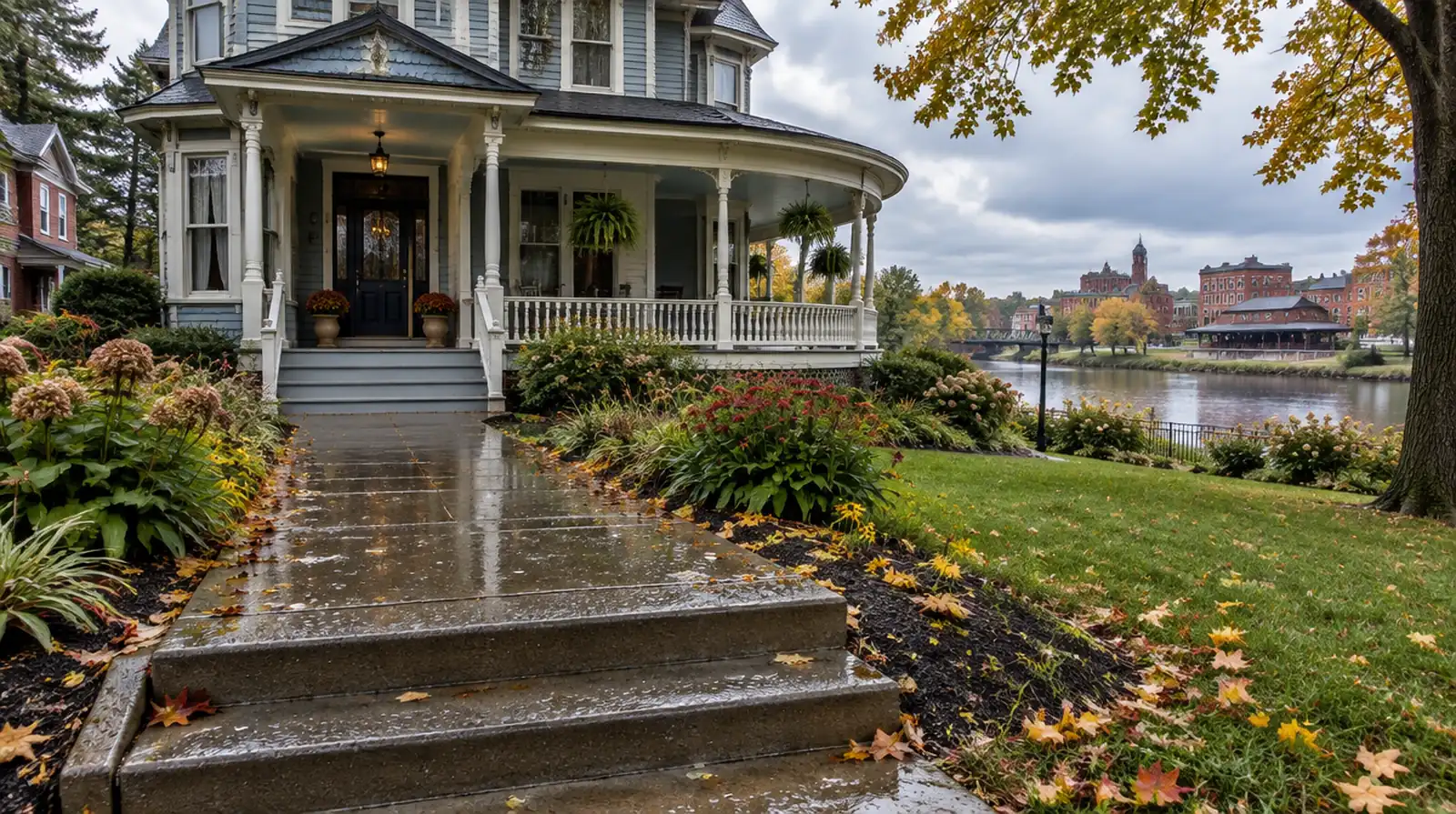
Why Michigan concrete scales
Concrete absorbs water. In winter, salty water soaks into driveways, sidewalks, porches and steps, then freezes and expands. After many freeze-thaw cycles, the surface pops off in flakes, exposing rough aggregate. Salt makes it worse by increasing the number of cycles and pulling more water into the concrete. Sealing reduces absorption and slows the damage.
Penetrating sealers
Silane and siloxane sealers soak into concrete and make pores water repellent without changing appearance or traction. They do not peel and are ideal for driveways, sidewalks and steps that need to stay slip resistant through winter.
Film-forming sealers
Acrylic sealers sit on the surface and can enhance color on stamped or decorative concrete. They need renewing more often and can be slippery, so we add grit on steps and walkways.
Preparation
We pressure wash, degrease, remove moss and mildew and let concrete dry thoroughly. Sealing damp or dirty concrete wastes material and can trap moisture.
Timing
Late summer to mid fall is ideal. The concrete is dry, nights are still above freezing and the sealer can cure before salt season.
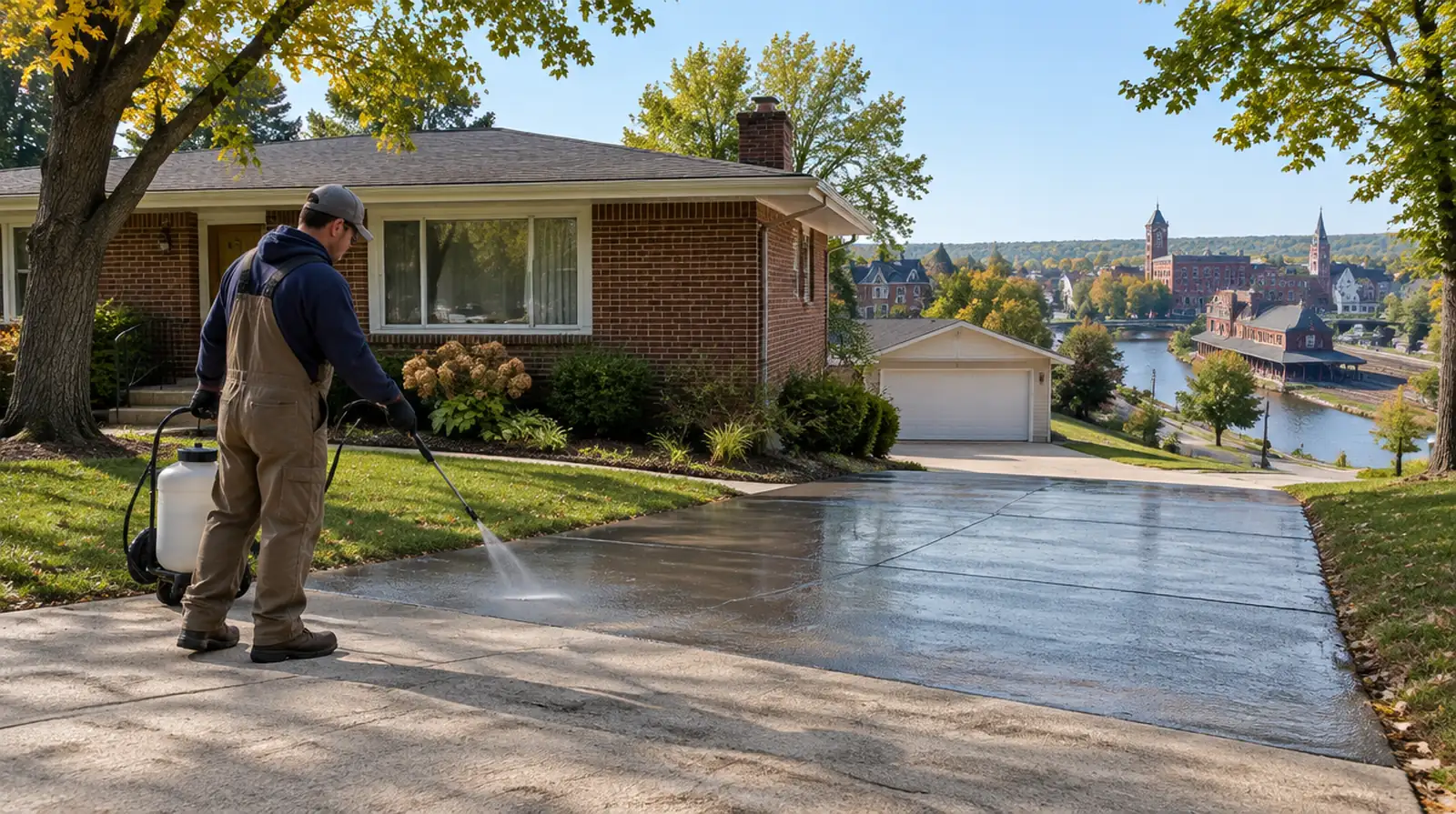
Cracks and joints
Water entering cracks and joints freezes and widens them. We clean and fill these with flexible sealant as part of sealing.
Porches and steps on older homes
Many historic homes have concrete steps and porches that have taken decades of salt. Sealing slows further deterioration. Badly scaled steps may need repair or resurfacing first.
New concrete
New driveways and walks should cure about a month, then be sealed before their first winter. This is one of the best ways to extend their life.
Deicer advice
Avoid ammonium-based deicers. Use sand or gentler products on newer concrete, and shovel before applying anything.
Resealing
Penetrating sealers last several years; acrylics a couple. When water stops beading, it is time to reseal.
Garage floors
Sealers reduce dusting and salt damage in garages, but a full coating offers much better protection.
Rental and multi-unit properties
Landlords with shared sidewalks, parking pads and stoops can protect them inexpensively with penetrating sealer each few years, reducing trip hazards from scaling and costly replacements.
Questions
Will it change the look? Penetrating sealers barely do.
Can it fix scaled concrete? No, but resurfacing can.
How long before I can walk on it? A few hours.
Shaded lots and old trees
Mature maples and oaks shade many yards in the older neighborhoods. Shaded walks and patios stay damp, grow algae and mildew and hold water longer before winter. We clean with treatments that kill growth at the root and use breathable, mildew-resistant sealers on these surfaces.
Stamped and decorative patios
Decorative patios fade in sun and lose gloss as sealers wear. We clean, strip flaking sealer where necessary and reapply to bring back color. Near pools and on steps, anti-slip additives keep wet surfaces safer.
What to expect on sealing day
Most residential jobs are done in one day. We ask you to move cars, close windows near the work area and keep pets indoors. Foot traffic resumes in a few hours and cars the next day.
Historic stoops and limestone trim
Some older homes pair concrete steps with limestone or brick trim. We protect those materials during work and choose sealers that will not stain or darken masonry. On steps that are already flaking, we can patch edges and treads before sealing so the repair and the original concrete age together. Sealing every few years is far cheaper than rebuilding a set of front steps after salt has done its work.
Sealing for landlords
For multi-unit and rental properties, we can seal shared walks, stoops, parking pads and patios in one visit and set a reminder schedule for resealing.
Schedule sealing
Call (734) 896-5842 for a free estimate.