How flake floors are built
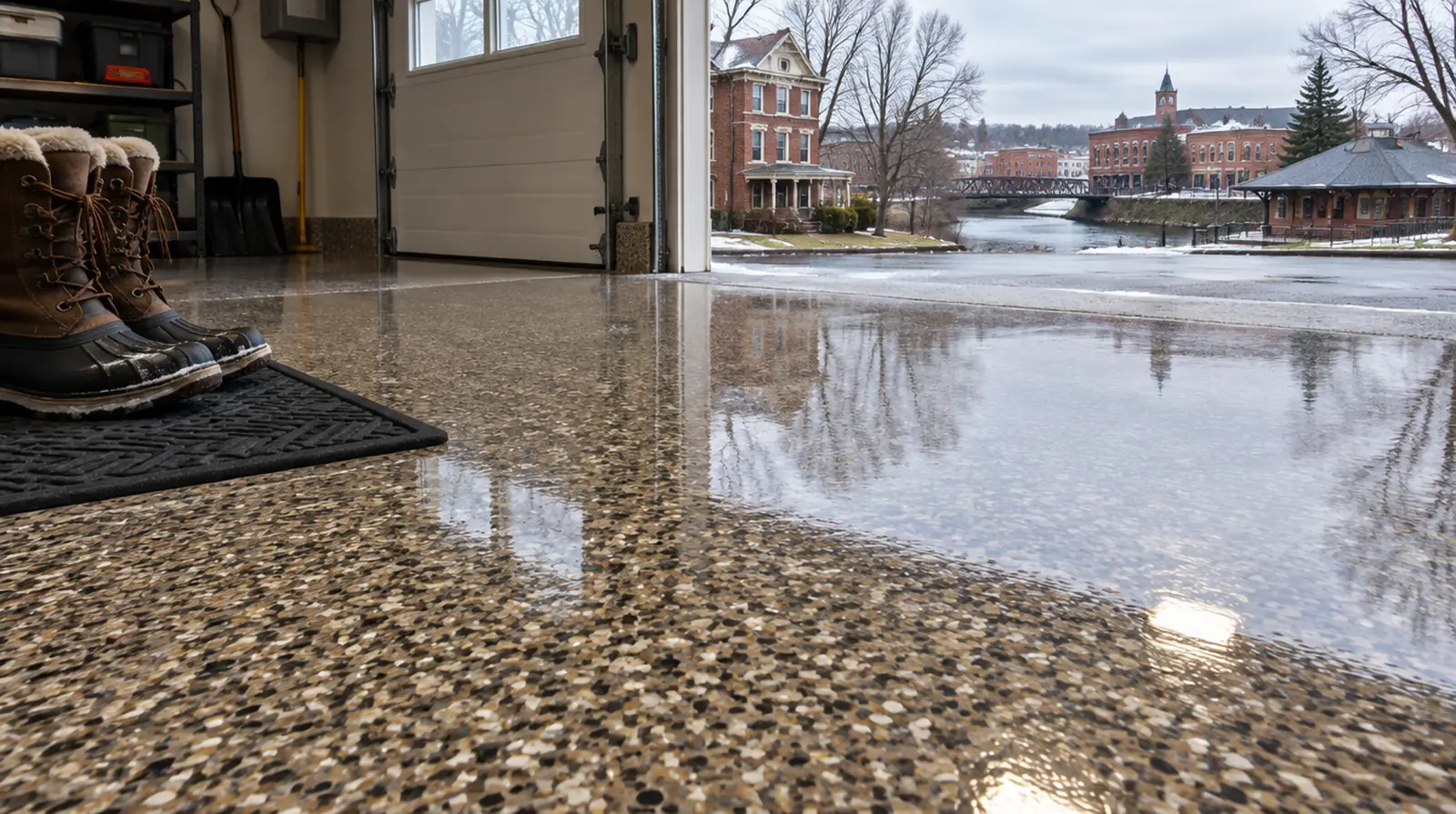
A flake floor starts with a ground slab and a primer. A colored base coat goes down, and while it is wet, vinyl chips are broadcast across the surface until no base coat shows. Once cured, loose chips are scraped and vacuumed away, leaving a textured layer. One or two clear topcoats lock the chips in and create the finished surface. The result is thicker than a painted coating, with built-in texture and a speckled look that disguises dirt.
Why flake suits Michigan garages
Salt residue, sand, slush and leaves show instantly on solid-color floors. A flake blend hides most of it between cleanings. The texture also adds traction when floors are wet with meltwater. That is why flake is our most requested garage system.
Basements and laundry rooms
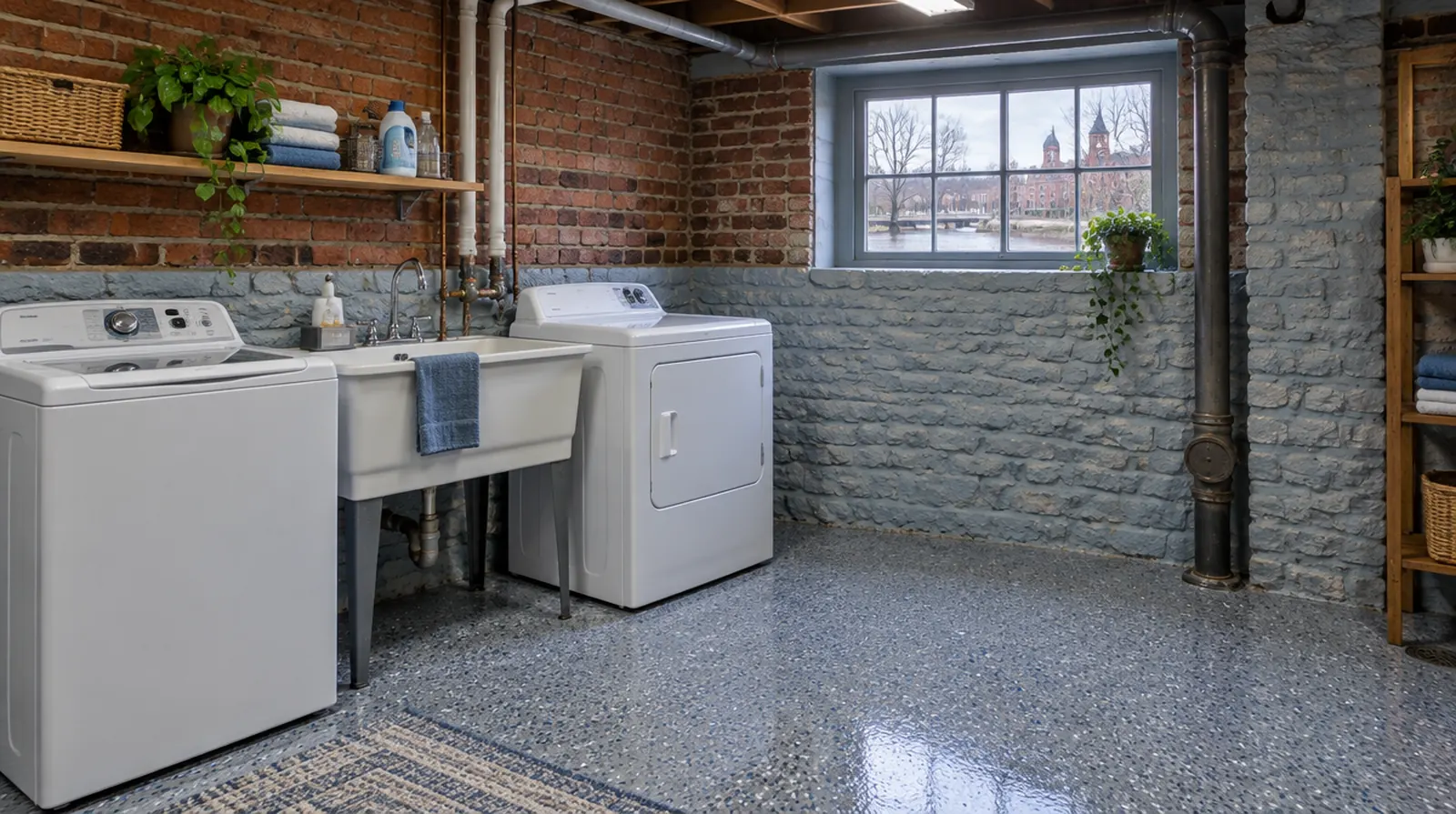
Older basements with stone or block walls often have uneven, patched floors. Flake handles imperfections gracefully, and it is easy to mop after a sump hiccup or a washer overflow. We moisture-test basement slabs and use vapor-tolerant primers where needed.
Choosing a blend
Gray and white blends feel clean and modern. Tan and brown suit older homes and hide dirt well. Blends with blue or red accents add personality. Chip size affects the look: smaller chips read as a fine texture, larger chips as a bolder pattern. We bring sample boards so you can compare in your own light.
Partial versus full broadcast
Partial broadcast scatters chips over a visible base color. It costs less but is thinner and shows more dirt. Full broadcast covers the base completely, producing a stronger, more uniform floor. We usually recommend full broadcast for garages.
Topcoat choices
Polyaspartic topcoats resist yellowing and cure quickly. Epoxy topcoats cost less but can amber in sun. For garages with windows or doors that let in daylight, polyaspartic is the better choice.
Texture levels
We can keep the surface smoother for easy sweeping or leave more texture for traction. Many homeowners choose extra texture near the door and less inside.
Workshops and small businesses
Flake floors are popular in home shops, small studios, salons and break rooms. They clean easily and tolerate spills.
Durability
A well-installed flake system lasts many years in a home garage. The topcoat may dull over time in high-traffic areas and can be refreshed with a screen and recoat.
Timeline
Most flake floors take one to two days, with light foot traffic the next day and vehicles a day or several later.
Questions
Will chips come loose? No, they are sealed under the topcoat.
Can flake go over old epoxy? Only after grinding if the old coating is sound.
Is it hard to clean? A squeegee and mop handle most messes.
Mudrooms and back entries
Many older homes enter through a back door into a mudroom or enclosed porch on a concrete slab. These spaces take wet boots, dog paws, sand and salt all winter. A flake floor with a little extra texture is one of the most practical upgrades for them. It cleans with a mop, hides grit between cleanings and does not swell or rot like wood or vinyl subfloors.
Matching a home's character
On Victorian and bungalow properties, homeowners often prefer warm, earthy blends that feel at home with brick and old woodwork. In newer subdivisions, cool grays are more popular. We keep a wide range of samples so the floor suits the house.
Pets and kids
Flake floors are forgiving under claws, toys and bikes. Scratches blend into the pattern, and spills wipe up without staining.
Our warranty and walkthrough
When the floor is done, we walk it with you and explain care. Written warranty terms are part of every estimate.
Choose your flake blend
Call (734) 896-5842 for a free estimate.