Start with the cause
Coatings fail for reasons: etched instead of ground concrete, thin kits, application over old paint or sealer, moisture in the slab, installation in cold or damp conditions and products not suited to the use. We inspect, ask questions and test before recommending repair or replacement. A fix that ignores the cause simply fails again.
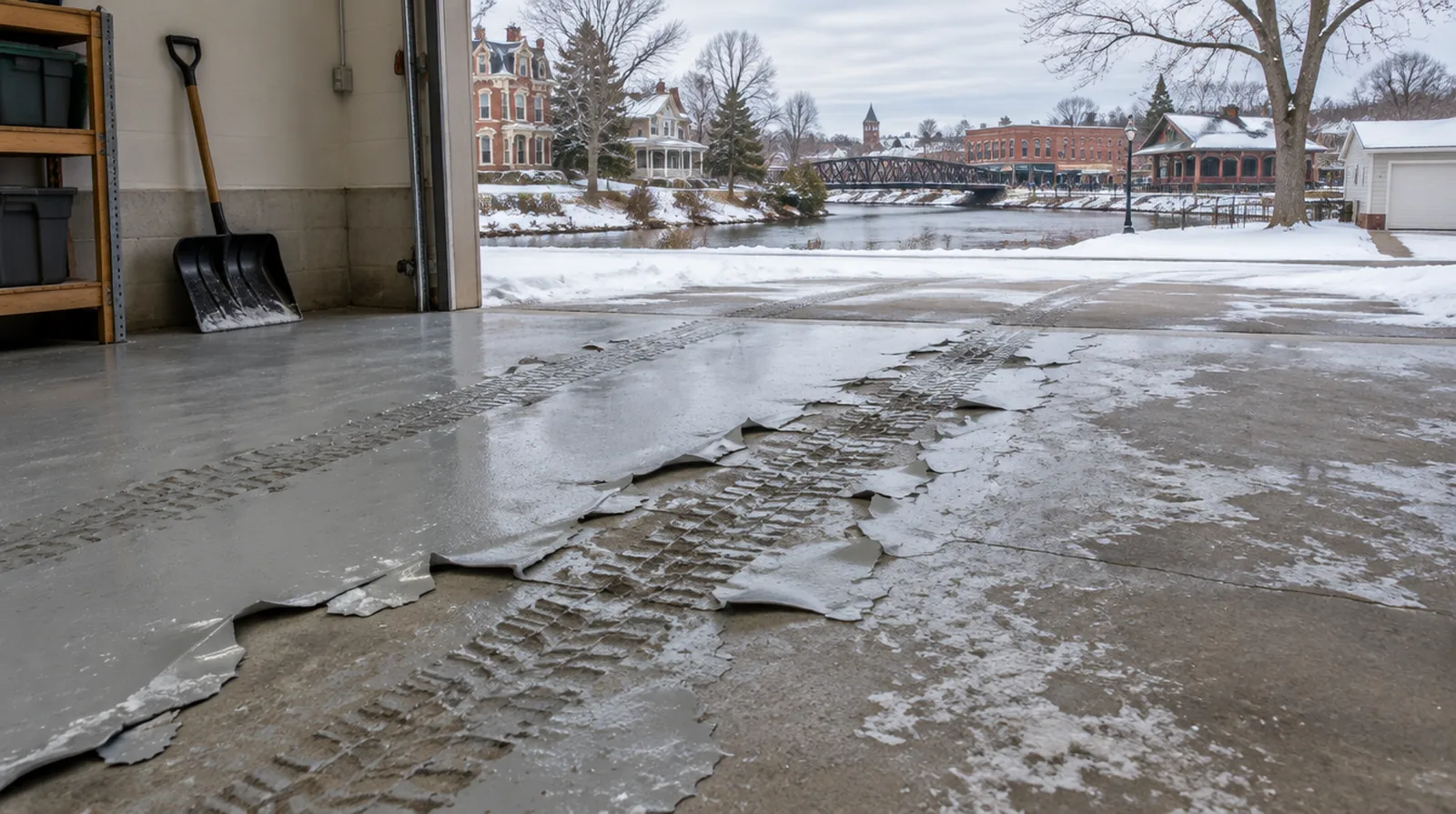
Peeling in tire paths
Coating lifting where tires sit is hot tire pickup, nearly always on thin kits over poorly prepared slabs. Spot repairs rarely last because the whole floor has a weak bond. Full removal and a proper ground and primed system is usually the economical choice over time.
Salt damage under the coating
When salt water finds its way under chipped or thin coatings, it attacks the concrete and the bond. Coatings flake in patches near the door. We grind off loose material, repair spalled concrete and recoat with a salt-resistant system.
Basement blisters
Bubbles and blisters in basement coatings usually come from moisture vapor. Older basements without vapor barriers are prone to this. Repair requires removing the coating where blistered, testing and installing a moisture-mitigating primer before recoating.
Yellowing
Amber discoloration near windows and doors is epoxy reacting to UV. If the floor is otherwise sound, abrading and adding a polyaspartic topcoat restores color.
Chips and gouges
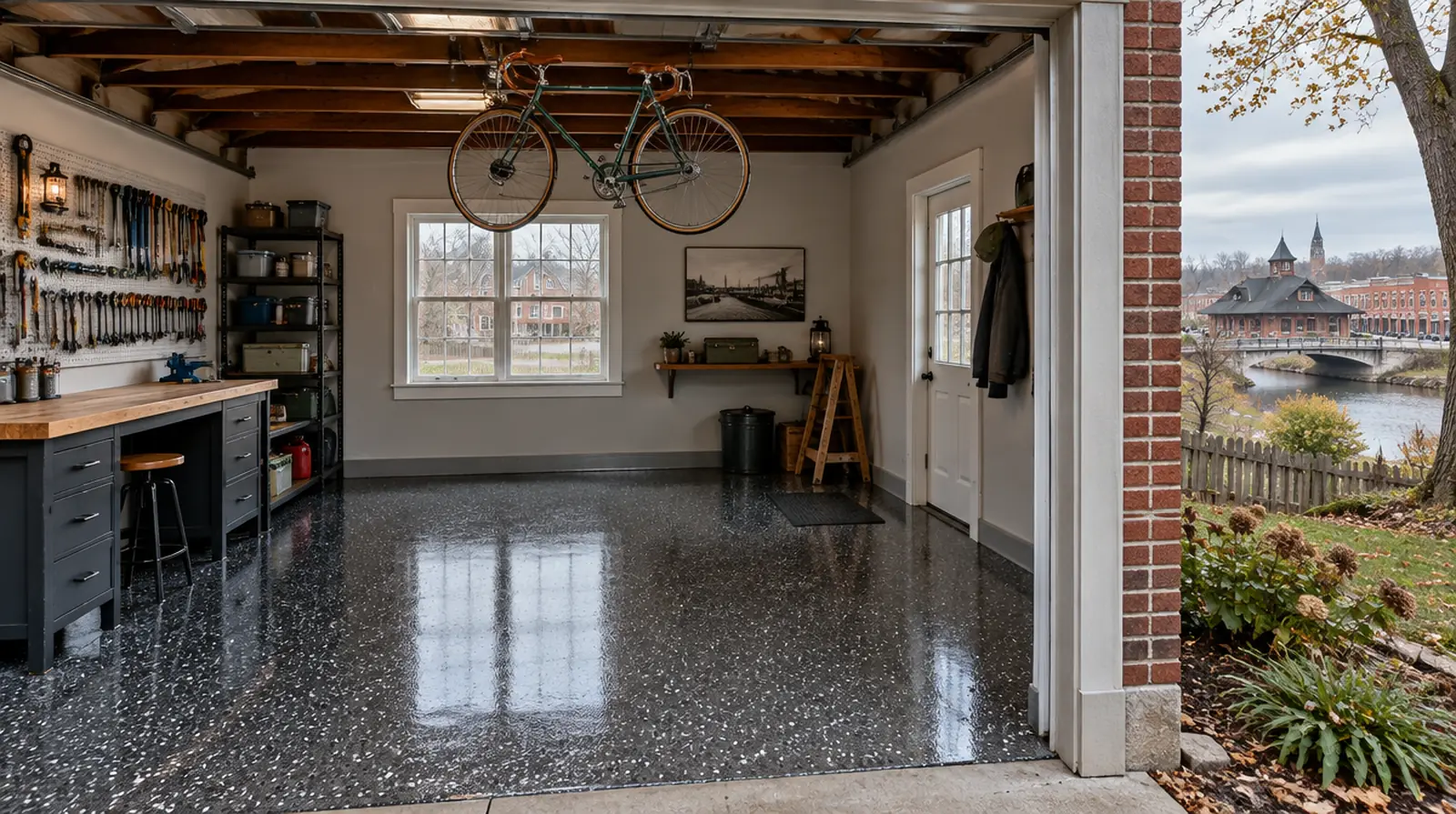
Dropped tools and snow blower skids leave chips. We clean, fill and blend them, often finishing with a fresh topcoat so repairs disappear.
Worn topcoats
Dull traffic lanes mean the topcoat is wearing thin. If the layers below are sound, a screen and recoat refreshes the floor inexpensively.
Cracks showing through
Frost heave and settlement can crack slabs under coatings. We cut back coating along cracks, fill with flexible material and recoat.
Old paint under new coatings
Many failed floors were coated over garage paint. The new coating bonded to paint, and the paint let go. Grinding to bare concrete is the only reliable fix.
Removal
Grinding off coatings is loud and dusty, but our extraction equipment controls dust. Thick or layered coatings take extra time.
Repair or replace
Widespread failure usually justifies replacement. Isolated damage on a sound floor can be repaired and recoated.
Rental property repairs
Landlords often call us between tenants when a basement or garage coating has been damaged by heavy use. We can schedule quick repairs and recoats around move-out and move-in dates.
Questions
Can you fix someone else's work? Yes, most repairs are.
Will patches show? A full topcoat helps them blend.
Should I send photos? Yes, it speeds up quoting.
Utility areas in old basements
Coatings near water heaters, washers, furnaces and sump pits fail first. Condensation, small leaks and humidity loosen edges and let water creep beneath. We cut back failed areas, dry and test the slab and recoat with moisture-tolerant materials. Simple fixes like drip pans and redirected discharge lines help repairs last.
Spring thaw damage
Many calls come in April after a winter of salt and meltwater. We see lifted edges near garage doors, chipped spots from shovels and blisters in damp basements. Spring is a good time to assess and plan repairs before the next winter.
Selling a house with a failing floor
A peeling garage or basement coating can be one of the first things buyers notice. Before listing, many sellers have us remove the failed coating and install a fresh floor or simply grind and seal the slab clean. Either option looks better in photos and at showings than a half-peeled kit floor, and it removes a question inspectors and buyers might raise.
Honest assessments
If a floor can be saved with a recoat, we will say so. If it cannot, we explain why and what replacement involves.
Get a repair assessment
Call (734) 896-5842 for a free estimate.