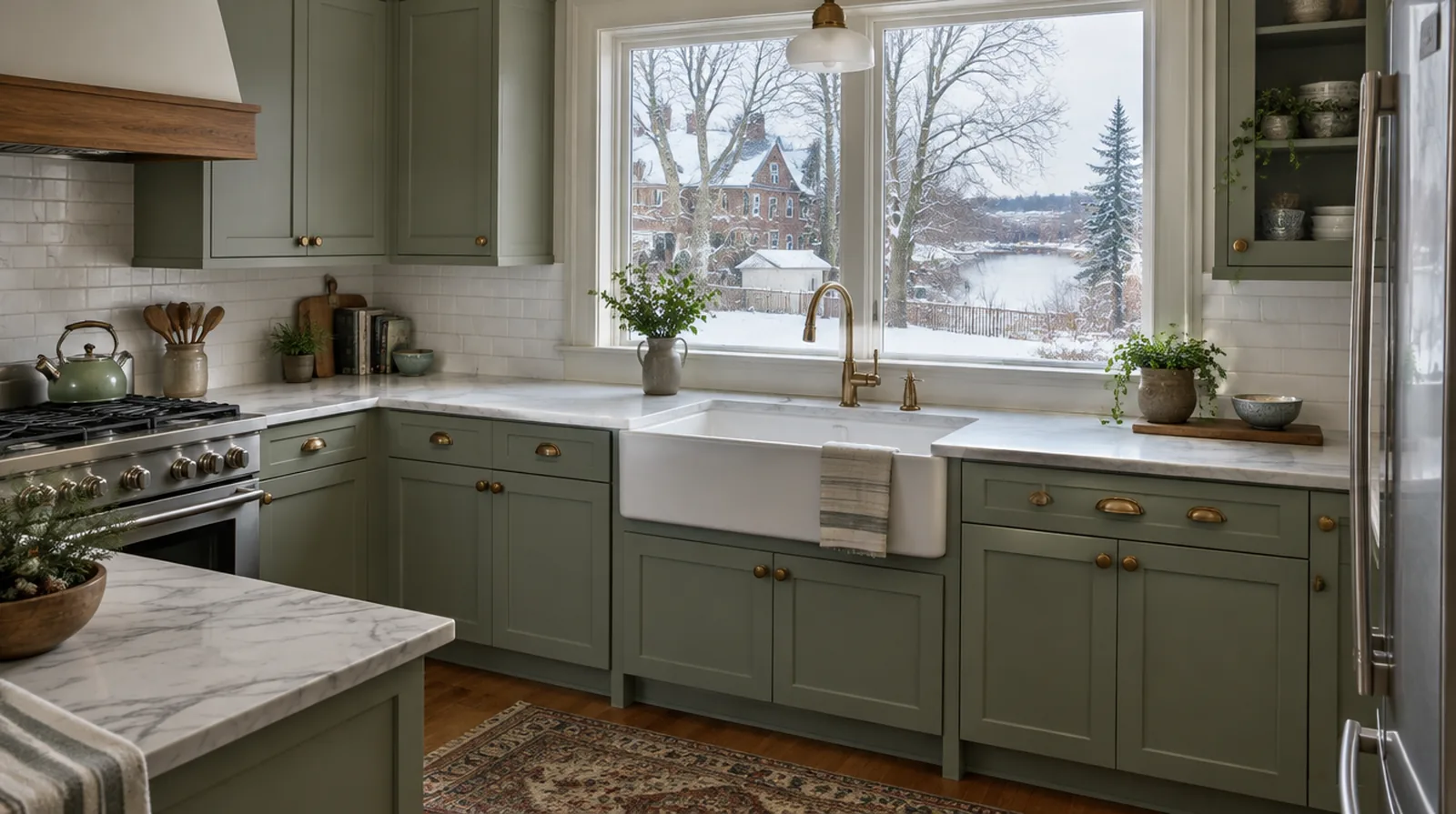
A fresh surface without demolition
Epoxy countertops are thick self-leveling resin poured over existing counters. The result is a seamless, glossy surface in looks ranging from marble and granite to metallic swirls or solid colors. For dated kitchens, basement bars, bathroom vanities and rentals, resin delivers a dramatic change without tearing out cabinets.
Suitable surfaces
Sound laminate, tile, wood and older solid surface tops can be resurfaced. Damaged or water-swollen substrates are repaired or replaced first.
Preparation
We sand, clean and repair, fill grout lines and seams and prime. Cabinets, floors and appliances are covered to catch drips.
The pour
Resin is applied in layers, with colors and pigments worked in while wet. Bubbles are released with heat. Edges are formed as resin flows over them.
Winter installs
Resin needs warmth to cure. In winter we make sure the room stays heated and draft-free, and we keep doors closed during cure.
Strengths and limits
Resin is waterproof, seamless and easy to clean, but less resistant to heat and scratches than stone. Use trivets and cutting boards.
Sunlight
Epoxy can yellow in strong sun. UV-resistant topcoats and warmer colors help near bright windows.
Rentals
Landlords near campus often refresh worn laminate with neutral resin finishes that hold up to tenant use and photograph well.
Timeline
Usually two to three days on site, light use after about a day, full cure in about a week.
Care
Mild soap and water, no abrasive pads. Fine scratches can be buffed; a flood coat refreshes the finish.
Cost
Generally less than natural stone and more than new laminate.
Design session
We review photos and sample boards with you, matching colors to cabinets, hardware and flooring. Old houses with original woodwork often look best with warm creams, soft whites or wood-toned clear coats rather than stark modern finishes.
Coordinating with floors
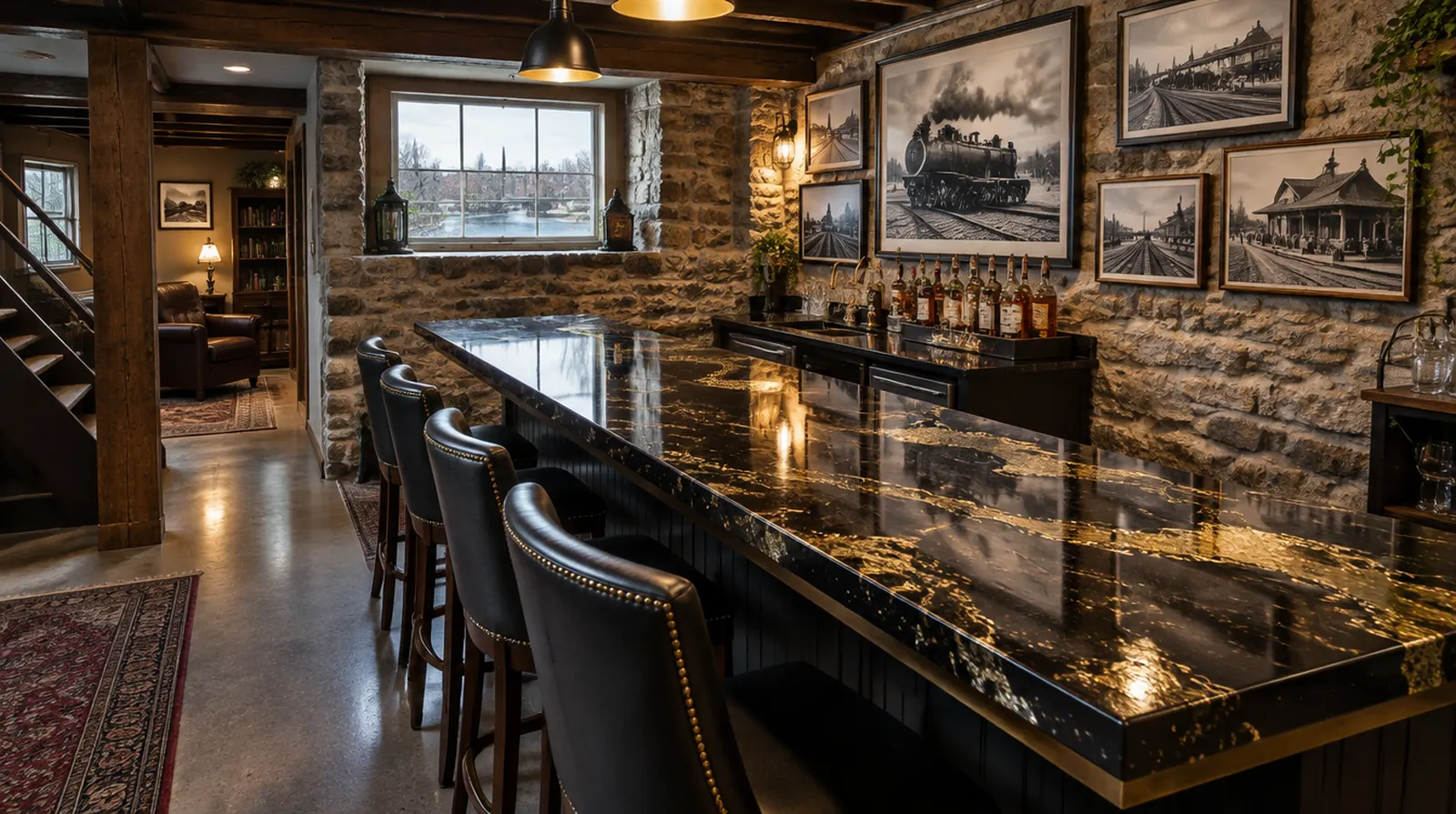
A basement bar top can match a metallic floor for a unified look.
Questions
Can it go over tile? Yes, once grout lines are filled.
Is it food safe when cured? We use products suitable for incidental contact.
Undermount sinks? We work around existing sinks.
Choosing a look
Marble effects start with a white or cream base and veins drawn through wet resin. Granite looks layer dark tones with flecks. Metallic tops swirl pearl pigments for depth. Clear resin over butcher block or reclaimed wood shows off grain. We test colors on sample boards before the pour.
Edges and backsplashes
Resin wraps the edge so there are no seams. L-shaped and U-shaped counters pour continuously. Short backsplashes can be coated to match; tall tile backsplashes are usually taped off and left in place.
Preparing the kitchen
We ask you to clear counters and plan for the kitchen to be off limits for a couple of days. We cover cabinets and floors, ventilate during work and leave care instructions when we finish.
Home bars and vanities
Basement bars and bathroom vanities are great first projects. Smaller surfaces mean faster installs, and bold finishes feel at home in these spaces.
Old houses, uneven cabinets
Kitchens in century homes sometimes sit on floors that have settled, leaving counters slightly out of level. Because resin self-levels, we check and shim where needed before pouring so the finish does not run toward one end. We also inspect for loose substrates and old water damage around sinks, which must be repaired first.
Renewing a resin top later
After years of use, a resin countertop can be lightly sanded and given a fresh flood coat to restore gloss and remove fine scratches.
Laundry rooms and workbenches
Resin is not just for kitchens. Laundry folding counters, craft tables and garage workbenches benefit from a tough, wipeable surface that shrugs off detergent, paint and glue.
Plan a countertop
Call (734) 896-5842 for a free estimate.